Micro-Rituals for the Workday: The Tiny Ceremonies That Structure Chaotic Days
Quick Answer: Micro-rituals are thirty-second-to-two-minute ceremonies — a deliberate coffee, a headphones-on focus starter, a between-meetings stretch, a shutdown list — that give a chaotic workday a skeleton. What makes them work isn’t the act itself but the intention behind it: two or three, done deliberately, beat a dozen habits done on autopilot.
The workday’s chaos isn’t fixed by bigger systems but by smaller ones — the micro-rituals, thirty-second ceremonies that mark transitions, protect focus, and give shapeless days a skeleton. Here’s the workday micro-ritual guide: why they work, where to place them, and how to make them actually stick.

Why Do Tiny Ceremonies Actually Work?
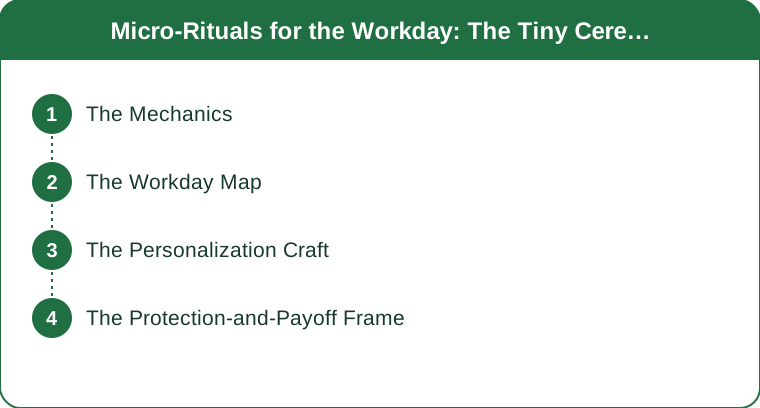
A few overlapping mechanics are doing the work here. Your brain wants clear boundary markers between modes — a ritual functions as a cognitive gear-shift, the same way a commute used to mark the line between work and home. A deliberate thirty-second pause also interrupts the blur of a packed day, working like a mini mindful moment embedded in an ordinary routine.
There’s a control piece too: a small ritual is a genuinely controllable island on a day when meetings metastasize and your calendar isn’t yours anymore — it restores a sliver of agency. And a ritual can double as a habit trigger, a repeated sequence that tells your brain “now we work” before a focus block even begins.
The distinction worth holding onto: a ritual differs from a routine by intention. Coffee made on autopilot is routine. Coffee made deliberately — noticed, not just consumed — is ceremony. Attention is the active ingredient, not the coffee.

Where in the Workday Should I Actually Place a Ritual?
Think of the day as a series of slots, each with its own natural ritual:
- The day-opening ceremony — desk cleared, water filled, one line of intention written before you touch email. A two-minute launch that replaces drifting straight into your inbox.
- The focus-block starter — headphones on, phone drawered, timer set, same sequence every time. The repetition is what makes it a trigger.
- The between-meetings reset — thirty seconds to stand, stretch, and take one deliberate breath before the next call starts. It releases the previous meeting instead of carrying it into the next one.
- The lunch boundary — eaten away from your desk, marked as a real break, ideally followed by a short walk that doubles as the afternoon’s opening ceremony.
- The afternoon-slump ritual — a 3pm tea made with actual deliberateness, kettle to cup, met with ceremony instead of a scroll through your phone.
- The day-closing ceremony — a shutdown ritual: tomorrow’s list written, tabs closed, desk reset, work ended on purpose instead of trailing off. If you work from home, a short walk or even standing on the porch can function as the commute you no longer have.

How Do I Make These Rituals Actually Feel Like Mine?
A few things separate a ritual that sticks from one that fades by Thursday:
- Give it a sensory anchor — a specific mug, a desk plant you water, a hand cream you apply. The physical detail is what makes the ceremony feel real instead of performative.
- Keep it honest about duration — thirty seconds to two minutes is the ceiling. A “ritual” that takes ten minutes is a break wearing a ritual’s clothing; smallness is what lets it survive a busy day.
- Match it to your temperament — an introvert’s silent tea ritual and an extrovert’s quick greeting-round with colleagues are both valid; the fit matters more than the form.
- Attach it to a value — an intention line connected to why you’re doing the work outlasts a ceremony that’s just habit with extra steps.
- Calibrate for visibility — some rituals stay invisible, others get normalized with coworkers (the headphones-on signal, for instance, that colleagues learn to read as “don’t interrupt”).
- Treat it as an experiment — trial one ritual for two weeks, then keep, adjust, or drop it. Not every ritual you try is going to earn a permanent slot.
What Nobody Tells You About Keeping Rituals Alive
- Chaotic days need rituals the most and are exactly when you’ll want to skip them. The fix isn’t dropping the ritual — it’s shrinking it to ten seconds instead.
- A back-to-back calendar can be fought with ritual buffers. Booking five-minute gaps between meetings and treating them as protected transition time is a small, calendar-level defense against meeting culture.
- A lapsed ritual doesn’t need a big recovery moment. You’re one deliberate coffee away from restarting — no ceremony about the ceremony required.
- The payoff compounds. A day with two or three small ceremonies feels structured; a week of those days feels less blurred; the burnout resistance gets built thirty seconds at a time.
- The skill transfers. Once workday micro-rituals feel natural, the same instinct tends to spill into evening wind-down routines and seasonal markers.
Micro-Rituals FAQ
How many workday rituals should I actually try to keep?
Two or three is plenty. The full menu above is meant as options to choose from, not a checklist to complete — more than a handful starts to feel like extra admin instead of relief.
What’s the difference between a ritual and just a habit?
Intention. A habit can run on autopilot; a ritual requires you to notice it while you’re doing it. The same physical action — making coffee, for example — can be either, depending on whether your attention is actually there.
What should I do if I miss my ritual for a few days?
Just resume it. There’s no penalty lap or “getting back on track” ceremony needed — the next time you make that deliberate coffee or take that between-meetings breath, the ritual is back, fully intact.
Bottom Line
Micro-rituals are thirty-second ceremonies that mark transitions: a deliberate desk-opening, a focus-block entry sequence, a between-meetings sigh, a shutdown list. Intention is the active ingredient, two or three rituals suffice, and on chaotic days the move is to shrink them to ten seconds rather than skip them.
TL;DR:
- Micro-rituals work by marking transitions, resetting attention, and restoring a sense of control
- Place them at natural slots: day-opening, focus-block start, between meetings, lunch, the afternoon slump, and day-closing
- Anchor them sensorially, keep them under two minutes, and match them to your temperament
- On hard days, shrink the ritual instead of skipping it entirely
- Two or three consistent rituals do more than a dozen inconsistent ones
Keep Reading
This article is for general informational and styling purposes only. Fit, sizing, and product availability may vary.