Why Your Evening Ritual Stops Working After the First Month
Quick Answer: Evening rituals stop working after a month because they were built on motivation instead of a fixed trigger — anchoring the ritual to an existing habit, not willpower, is what makes it last past week four.
You built the perfect wind-down routine: candle, tea, journal, no phone. Week one felt amazing. By week five you’re back to scrolling in bed, and you can’t quite pinpoint when it slipped.

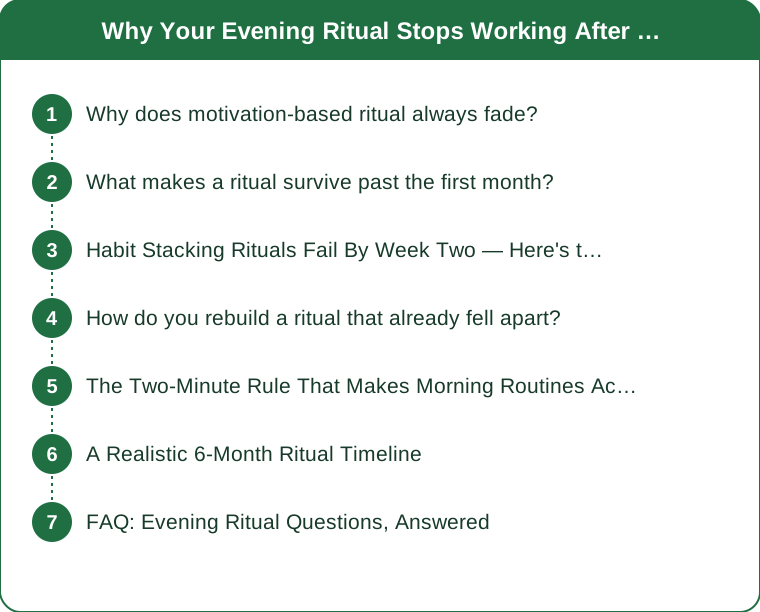
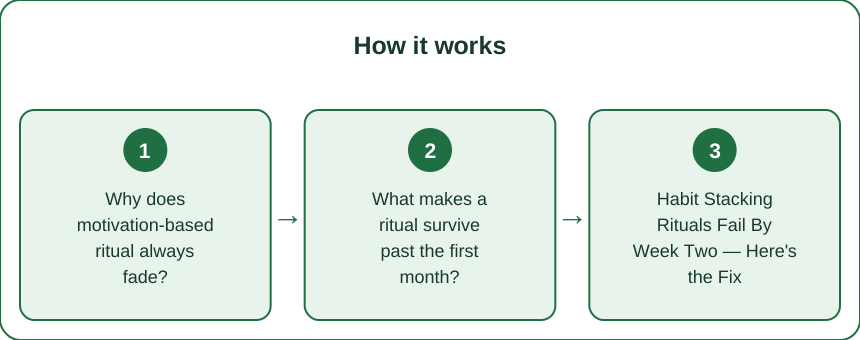
Why does motivation-based ritual always fade?
Motivation is a finite, fluctuating resource — it’s high when a routine is new and novel, and it naturally declines as the novelty wears off, regardless of how much you value the ritual. If your evening routine depends on feeling like doing it, you’ve built something that only survives on good days.
This isn’t a willpower failure. It’s a structural design flaw in how the ritual was built, and it happens to almost everyone who starts a new routine purely on enthusiasm.
What makes a ritual survive past the first month?
Habit stacking — attaching the new ritual directly after something you already do every single day without fail, like brushing your teeth or turning off the kitchen light. The existing habit becomes the trigger, so you don’t need motivation to remember or start it.
For example: ‘after I turn off the kitchen light, I light my candle’ removes the decision entirely. The ritual becomes automatic within 3-4 weeks because it’s riding on an already-automatic behavior.
Habit Stacking Rituals Fail By Week Two — Here’s the Fix
A common failure mode: people stack a new ritual onto another new habit they’re also still building, like ‘after my new evening walk, I’ll journal.’ If the anchor habit itself is shaky, the stacked ritual has nothing solid to hold onto and both collapse together.
The fix is choosing an anchor habit that’s been automatic for at least six months — something so ingrained you do it without thinking, even on your worst days. That stability is what the new ritual borrows.

How do you rebuild a ritual that already fell apart?
Don’t restart the whole routine at once — that’s often what caused the original burnout. Pick one single piece (just the tea, just the candle) and re-anchor only that to a stable existing habit for two weeks before adding anything else back.
Track completion, not experience — a simple checkmark on a calendar for ‘did the anchored action’ builds the pattern faster than journaling about how the ritual felt, which can become its own decision-heavy task.
The Two-Minute Rule That Makes Morning Routines Actually Stick
The same principle that saves morning routines works for evenings: make the ritual’s first step so small it takes under two minutes — lighting a candle, not a full 20-minute journaling session. Once the tiny action is automatic via habit stacking, it naturally tends to expand on its own over time.
Rituals that start big and ambitious are the ones most likely to be abandoned by week four; the small, anchored version is what survives long enough to become part of who you are, not just what you’re trying.
A Realistic 6-Month Ritual Timeline
Weeks 1-2: anchor one tiny action to a stable existing habit, track daily completion. Weeks 3-4: the anchored action starts feeling automatic; resist the urge to add more yet. Weeks 5-8: add one more small layer (the tea, then later the journal) only after the first layer feels effortless. Months 3-6: the full ritual runs on autopilot most days, with occasional off days that don’t derail it.
Expect at least one lapse somewhere in this timeline — a missed night doesn’t mean the system failed, it means you’re human, and the anchor habit will pull you back the next day if you let it.
FAQ: Evening Ritual Questions, Answered
How long does it really take to build a ritual that sticks?
Most people see a genuinely automatic ritual within 8-12 weeks when using habit stacking correctly, longer if the anchor habit itself isn’t fully stable yet.
What if I miss a night — does that ruin the ritual?
No — a single missed night is normal and doesn’t reset progress; the anchor habit will bring you back to it the next day without needing willpower.
Should I build my whole ritual at once or one piece at a time?
One piece at a time, stacked onto a stable existing habit, has a much higher success rate than launching a full multi-step routine on day one.
TL;DR:
- Motivation-based rituals fade because motivation naturally declines over weeks
- Habit stacking onto a 6-month-stable habit gives the ritual a reliable trigger
- Start with a two-minute version, not the full routine
- A missed night doesn’t mean failure — the anchor habit pulls you back
Pick the smallest possible version of your ritual, attach it to something you already do without thinking, and give it eight weeks before judging whether it stuck.
Keep Reading
This article is for general informational and styling purposes only. Fit, sizing, and product availability may vary.