Why a Morning Routine You Copied From Someone Else Almost Never Sticks
Quick Answer: A morning routine copied wholesale from someone else’s video or article usually fails because it was built around their specific schedule, energy patterns, priorities, and motivations, not yours — a routine that isn’t rooted in your own actual constraints and goals tends to feel effortful rather than sustaining, and effortful routines rarely survive past the first stressful week.
The problem usually isn’t willpower — it’s that the routine was never really designed for the life it’s being dropped into.

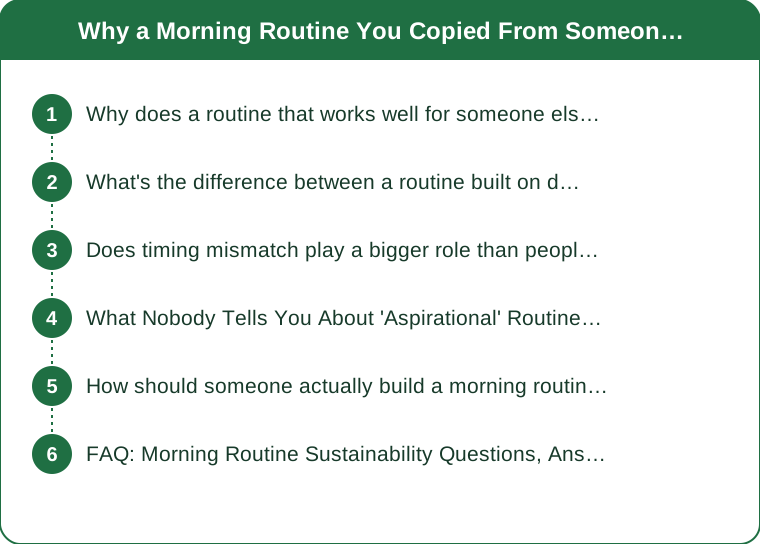
Why does a routine that works well for someone else often fail for you specifically?
Someone else’s morning routine reflects their particular schedule, sleep patterns, family situation, job demands, and personal priorities, all of which shape not just what they do but why each piece feels worth doing to them — copying only the visible actions (cold shower, journaling, a 5am wake time) without the underlying context strips out the actual reasons those actions were sustainable for that person in the first place.
What’s the difference between a routine built on discipline versus one built on identity?
Routines maintained through sheer willpower tend to erode quickly under stress, poor sleep, or a busy week, because willpower is a limited, fluctuating resource — routines that instead connect to a genuine identity or value (‘I’m someone who starts the day calmly’ rather than ‘I have to journal’) tend to survive rough patches better, since the motivation comes from something more stable than daily motivation levels.
Does timing mismatch play a bigger role than people expect?
Yes — a routine designed around someone else’s natural wake time, work schedule, or energy pattern (a naturally early riser’s 5am routine, for instance) can be fundamentally mismatched for someone with a different chronotype or schedule, making the routine feel like a fight against your own biology rather than a support for it.

What Nobody Tells You About ‘Aspirational’ Routine Content
A lot of widely shared morning routine content is implicitly aspirational rather than fully representative — filmed on an unusually calm day, sometimes reflecting a best-case version of a routine that isn’t actually followed with that consistency even by the person sharing it. Treating a polished routine video as a literal, achievable daily template (rather than a rough source of ideas to adapt) sets an unrealistic bar that a copied routine was never actually built to meet.
How should someone actually build a morning routine that holds up over time?
Starting with one or two small pieces genuinely rooted in your own priorities and schedule — not five or six borrowed elements at once — and letting the routine grow only as those first pieces prove sustainable tends to produce something that survives busy weeks, rather than a large borrowed routine that collapses the first time real life interferes.
FAQ: Morning Routine Sustainability Questions, Answered
How many new habits should be added to a morning routine at once?
One or two at most — adding several new elements simultaneously significantly increases the chance the whole routine collapses under the combined effort, compared to building gradually.
TL;DR:
- Copied routines often miss the underlying context that made them sustainable for someone else
- Identity-based motivation tends to hold up better than pure willpower-based routines
- Timing mismatches with your own natural schedule or energy pattern undermine adherence
- Polished routine content is often a best-case version, not a realistic daily template
- Building gradually from one or two genuinely fitting habits outlasts a large borrowed routine
A routine that actually sticks is usually built from your own constraints outward, not copied in from someone else’s life.
Keep Reading
This article is for general informational and styling purposes only. Fit, sizing, and product availability may vary.