Transition Rituals: the 5-Minute Buffers That Keep Your Roles From Bleeding Into Each Other
Quick Answer: The frazzled feeling of work-brain at dinner or parent-brain during date night is a transition problem: modern life removed the natural buffers (commutes, doorways, changing clothes) that used to mark role switches, so roles bleed. The fix is deliberate micro-rituals — 2-5 minute fixed sequences at the seams of your day (a walk-around-the-block ‘commute,’ a clothes change, a threshold pause) that tell your nervous system the context changed. Small, physical, and repeated is the formula; the ritual’s content matters less than its consistency.
Remote work deleted the commute and everyone celebrated — then discovered the commute had been doing unpaid psychological labor the whole time: it was the national ritual for turning work-self into home-self. The roles didn’t stop needing the buffer; the buffer just stopped existing.

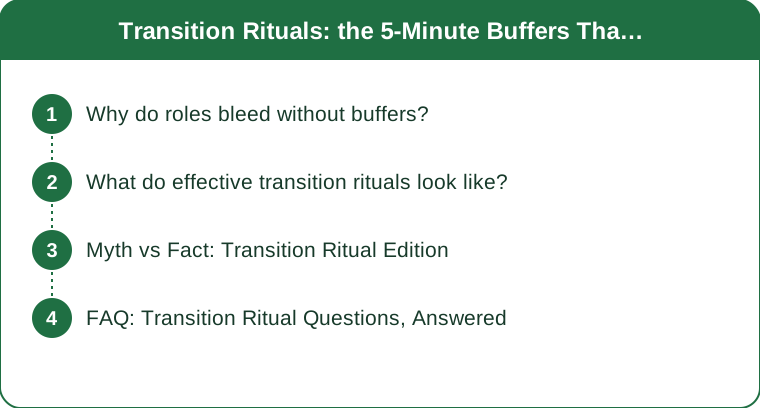
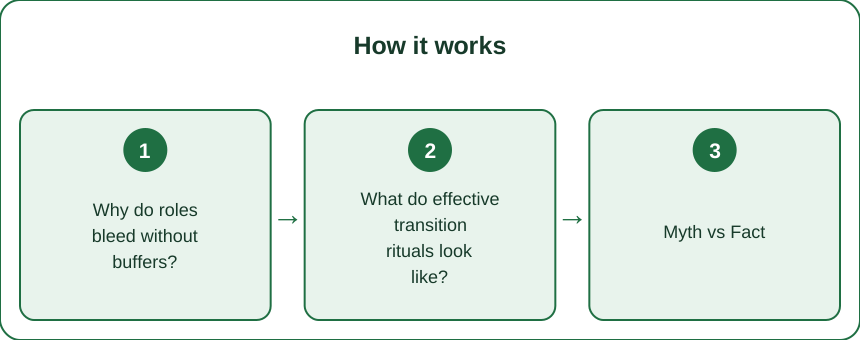
Why do roles bleed without buffers?
The psychology underneath: each of your roles — worker, parent, partner, friend, self — runs on a different mental configuration (vocabulary, vigilance level, pace, priorities). Switching configurations isn’t instant; attention research calls the drag ‘residue’ — thoughts and activation from the previous context persisting into the next.
Rituals work because the brain is a context machine: repeated physical sequences become cues that trigger the associated state — the same mechanism that makes a pre-shot routine steady an athlete or a bedtime routine sleepy a toddler. A transition ritual is a context cue you install on purpose at a seam where the environment stopped providing one.
The modern seam inventory makes the problem obvious: bedroom-to-desk (no commute), video-call-to-dinner (no walk to the car), caregiving-to-couple-time (no staff change), weekend-to-Monday (no Sunday evening structure). Each deleted buffer is a place roles now collide — and each is a 5-minute installation site.
What do effective transition rituals look like?
The design formula: physical + brief + identical every time.
- The fake commute (work→home): a 10-minute walk around the block that ends at your own door — the classic remote-work fix, and the most reliably effective because it’s fully physical and leaves the house. Budget version: a doorway pause — hand on the frame, three slow breaths, one sentence (‘work is done for today’) — 30 seconds, surprisingly potent with repetition.
- The clothes change: the two-tier wardrobe logic — changing out of work clothes (even casual ones) into home clothes is a full-body context cue that predates psychology’s interest in it.
- The shutdown sequence (work→anything): a fixed end-of-work liturgy — review tomorrow’s top item, close every tab, write one line of ‘where I left off,’ physically close the laptop, say the same closing phrase. The ‘where I left off’ note is the residue-killer: the brain releases what it knows is written down.
- Entering caregiving: 2 minutes in the parked car (or outside the door) — phone away, breathe, deliberately picture the first 10 minutes of presence — the pediatric-advice classic that works for any caregiver.
- Reclaiming evening-self: a boundary object — a candle lit when the evening becomes yours, a specific tea, a playlist — small anchors that mark ‘this time belongs to a different me.’
Installation rules: one seam at a time (the work→home seam usually pays most), 2 weeks of repetition before judging (cues need conditioning), and identical execution — variation resets the conditioning clock.

Myth vs Fact: Transition Ritual Edition
Myth: Rituals are woo — willpower should handle switching. Fact: The attention-residue research says switching is a measurable cost, not a character test — and conditioned cues demonstrably speed state changes (the entire sports-psychology pre-performance literature agrees). The ritual isn’t mysticism; it’s an interface for a context-dependent brain.
Myth: Longer, fancier rituals work better. Fact: Consistency beats content by a wide margin — a 30-second identical doorway pause outperforms a 20-minute elaborate sequence performed occasionally. The conditioning runs on repetition; the aromatherapy is optional garnish.
Myth: If I still think about work at dinner sometimes, the ritual failed. Fact: Buffers reduce residue; they don’t install firewalls. The honest metric is trend — fewer work-thought intrusions, faster returns to presence, the household noticing you ‘arrive’ better. (Persistent inability to disengage — rumination that rituals never dent, sleep loss, dread — is beyond buffer territory and worth professional support. This is general information, not medical advice.)
The deeper reframe: pre-modern life was dense with transition rituals (dressing for dinner, evening bells, washing before meals) — their disappearance wasn’t progress in this one respect; the frazzle is partly a ritual deficit, and deficits refill.
FAQ: Transition Ritual Questions, Answered
What’s the single highest-value seam to start with?
For most working adults: the work→home seam (fake commute or shutdown sequence) — it guards the evening, which funds everything else. Parents often report the pre-caregiving car pause as the close second.
My schedule is chaotic — can rituals work without fixed times?
Yes — rituals attach to seams, not clock times: ‘whenever work ends’ triggers the shutdown sequence at 4pm or 8pm alike. Chaos makes the cues more valuable, not less; they’re portable structure.
How is this different from just taking a break?
A break is rest inside the same context; a transition ritual is a marker between contexts — same 5 minutes, different job. The distinguishing features are the fixed sequence and the semantic edge (‘this ends, that begins’), which is why scrolling in the parking lot doesn’t transition anything: it’s contextless noise, not a seam marker.
TL;DR:
- Roles run on different mental configurations; deleted buffers (commutes, doorways, clothes changes) let residue bleed between them
- Install micro-rituals at the seams: fake commute, shutdown sequence with a ‘where I left off’ line, car pause before caregiving, boundary objects for evening-self
- Formula: physical + brief + identical, one seam at a time, 2 weeks of conditioning before judging
- Trend is the metric — fewer intrusions, faster arrivals; total firewalls were never on offer
The commute was secretly a ritual, the doorway was secretly a switch — put the markers back and the roles stop arriving at each other’s tables. This is general information, not medical advice.
Keep Reading
This article is for general informational and styling purposes only. Fit, sizing, and product availability may vary.