How to Make Self-Care a Daily Non-Negotiable
Look at what got cancelled from your week. Not the meetings, not the school run, not the deadline. The walk. The ten minutes with the book. The thing that was only for you, which is exactly why it was the easiest thing to drop.
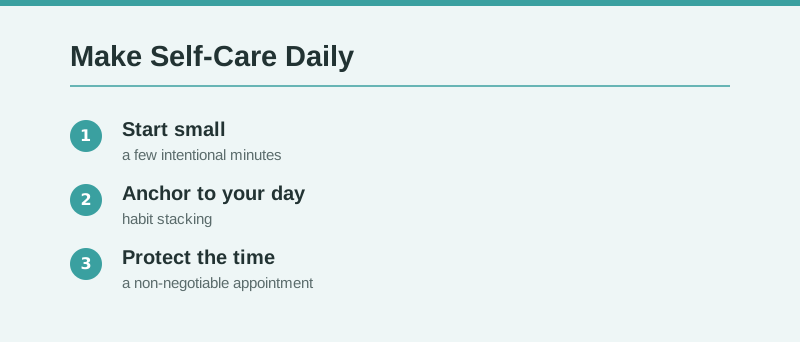
Quick Answer: Self-care becomes non-negotiable when you treat it like an appointment rather than a leftover. Three things make that stick: keep it small enough to survive a bad day (5–15 minutes), anchor it to something already in your schedule, and protect it the way you’d protect a commitment to someone else. Choose activities that genuinely restore you rather than ones you think you should be doing.

Why Is Self-Care Always the First Thing Dropped?
Because it’s the only item on your list with no external accountability.
A meeting has someone waiting. A deadline has consequences. A dentist appointment has a cancellation fee. Your fifteen-minute walk has none of that, so when the day compresses, it’s structurally the easiest thing to cut — not because you value it least, but because nothing pushes back when you do.
The fix is to give it the same structure other commitments have:
- Put it in the calendar with a specific time, the way you would a call
- Give it a defined end, so it doesn’t feel like open-ended time you can’t afford
- Tell someone, if that helps. External expectation is powerful even when it’s mild
A reframe that helps: looking after yourself isn’t taken from the people who need you — it’s what keeps you resourced for them. That’s not a platitude; it’s the practical reason to protect the time when you’re busiest, which is precisely when it disappears.
How Small Is Small Enough?
Small enough that it survives your worst day of the month.
That’s the real design constraint. A routine built for a calm Tuesday will fail on a chaotic Thursday, and a few chaotic Thursdays is all it takes to lose the habit entirely.
Things that genuinely count:
- Five minutes of stretching before you leave a room
- One cup of tea sitting down, not standing at a counter reading email
- A ten-minute walk around the block, phone in your pocket
- Three slow breaths between two meetings
- Ten minutes with a book before sleep
The “I don’t have time” barrier dissolves the moment the requirement is five minutes rather than an hour. And a five-minute practice done daily produces something a monthly ninety-minute reset never does — a baseline shift, rather than an occasional spike.
Scale up only after it’s automatic. Two consistent weeks, then add five minutes. Most people who jump from five to thirty in one step are back at zero within a fortnight.
Where Do You Put It in the Day?
Attach it to something that already happens. The existing habit becomes the reminder, which means you’re not relying on memory at the exact moment memory is worst.
Anchor pairings that work:
- After you brush your teeth → two minutes of stretching
- After you pour your first coffee → five minutes sitting down with it, no screen
- After you close your laptop → a walk around the block
- After dinner dishes are done → ten minutes reading
- After you get into bed → four slow breaths
Pick a specific physical moment, not a vague time of day. “After lunch” is weak. “After I put my plate in the sink” is strong, because it’s an unmistakable trigger you can’t drift past.
Choose the time of day you’re most protected. For many people that’s early morning, before anyone else’s needs arrive. For others it’s the gap after work. There’s no correct answer — pick the slot with the fewest competing claims and defend that one.

5 Mistakes Everyone Makes
- Doing what you think you should. If meditation makes you tense and a walk makes you calm, walk. Self-care that feels like homework is just another obligation with a nicer name.
- Scheduling it in the day’s leftover time. Leftover time doesn’t exist on busy days. Book it, don’t hope for it.
- Making it conditional. “Once this project ships” and “when things calm down” are the two most reliable ways to never start.
- Turning consistency into pressure. A missed day is a missed day. Treating it as a broken streak is what turns one skip into a month off.
- Choosing something that needs setup. Anything requiring twenty minutes of preparation will lose to the version that requires none. Friction is the enemy of daily.
The first mistake is the most common, because “self-care” has acquired a specific aesthetic — candles, journals, elaborate routines — that has nothing to do with what actually restores any given person.
How Do You Know What Actually Restores You?
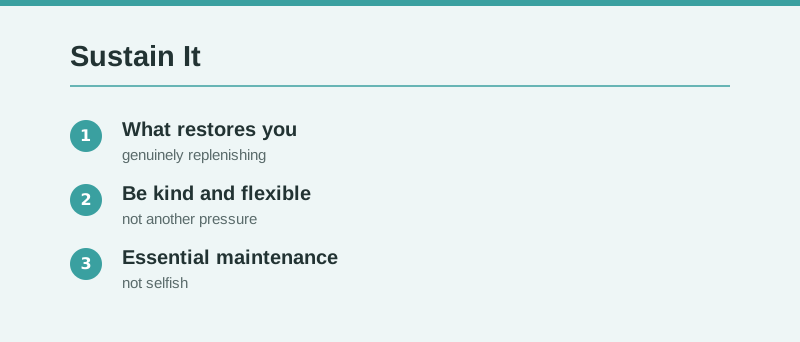
Pay attention to the after, not the during.
Some things feel pleasant and leave you flat; others feel like effort and leave you noticeably better. The only reliable test is how you feel twenty minutes afterward.
A quick audit — ask which of these leaves you more resourced:
- Solitude or connection? Some people refill alone; others refill with a friend
- Stillness or movement? A walk and a bath are both rest, and they’re not interchangeable
- Input (reading, music) or output (writing, cooking, making something)?
- Structure (a class, a routine) or unstructured open time?
Most people have a clear answer to at least two of those, and most people have been doing the opposite because it’s what self-care is supposed to look like.
Reduce friction wherever you can. Laying out clothes the night before removes a decision; something soft with a stay-put waistband — a high waist legging you don’t have to think about — makes a morning stretch or an evening walk a two-second choice rather than a small negotiation.
Where Does Flexibility Fit?
Be committed to that you do it, flexible about what it is.
Some days it’s a proper wind-down. Some days it’s three breaths between tasks. Both count, and treating the small version as failure is what breaks the habit — the shrunken version preserves the pattern, while skipping starts a gap.
The rule: never skip entirely, but always allow the two-minute version. That single policy is what carries a routine through a hard month.
A note on scope: daily habits like these support general wellbeing and aren’t a substitute for care. If you’re dealing with persistent low mood, anxiety that interferes with daily life, exhaustion that rest doesn’t touch, or ongoing sleep problems, please talk to a doctor or a mental health professional — those respond to treatment, not to a better routine.
FAQ
How much time does daily self-care really need?
Five to fifteen minutes is enough to matter, and it’s short enough to survive busy weeks. Consistency at a small scale outperforms occasional long sessions for how you feel day to day.
What if I genuinely have no time?
Then the answer is a shorter practice, not no practice. Sixty seconds of slow breathing before you get out of the car counts. The requirement is that it happens, not that it’s substantial.
Is it selfish to protect this time?
No — and the practical case is straightforward. Someone rested and resourced has more to give than someone running empty. Protecting a few minutes is maintenance, not indulgence.
TL;DR:
- Self-care gets dropped because nothing external holds you to it — so give it a calendar slot
- Keep it small enough to survive your worst day: 5–15 minutes
- Anchor it to a specific physical moment, not a vague time of day
- Choose what genuinely restores you, not what self-care is supposed to look like
- Never skip entirely, but always allow the two-minute version
- Reduce friction — anything needing setup will eventually lose
Making self-care a daily non-negotiable means starting small, anchoring it to what already happens, protecting the time like an appointment, and being honest about what actually restores you. A few intentional minutes daily keep you steadier than any occasional reset — and they deserve a protected place in every single day.
Keep Reading
This article is for general informational and styling purposes only. Fit, sizing, and product availability may vary.