An Evening Wind-Down Routine for Better Rest
Most people treat bedtime like a light switch — awake one minute, expected to be asleep the next. Your brain doesn’t work that way. It needs a runway, and a well-built evening wind-down routine is exactly that: a repeatable sequence of small cues that tells your body it’s safe to power down.
Quick Answer: A solid evening wind-down routine dims lights and screens 60 minutes before bed, swaps in calming rituals like stretching or reading, runs on a consistent schedule, and clears mental clutter before you lie down. Do the same steps in the same order most nights and your body starts falling asleep faster within 1-2 weeks.

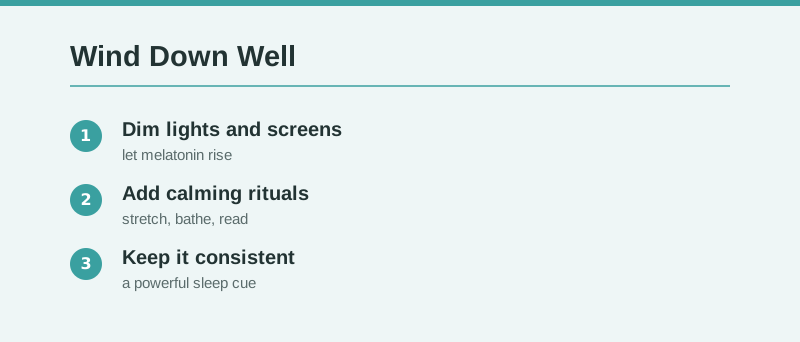
Why do lights and screens matter so much before bed?
Bright light — especially the blue wavelengths pouring off your phone, laptop, and TV — tricks your brain into thinking it’s still 3 p.m. That suppresses melatonin, the hormone that actually makes you drowsy, sometimes delaying its release by 30-60 minutes. So about an hour before you want to be asleep, start dimming overhead lights and put screens away (or at minimum, flip on night mode and drop brightness to under 20%).
A few practical swaps:
- Lamps over overhead lights — warmer, lower, easier on melatonin
- Phone in another room — charging it in the kitchen removes the temptation entirely
- Screen curfew at T-minus 60 minutes, not “whenever I get tired”
Your brain genuinely can’t tell the difference between a screen at 11 p.m. and sunlight at noon, and that’s the whole problem.

What calming rituals actually help you unwind?
The best rituals are boring on purpose — that’s the point. Fill your wind-down hour with things that lower your heart rate rather than spike it: 5-10 minutes of gentle stretching, a warm shower, a physical book (not a tablet), a caffeine-free tea, or slow breathing for a few minutes. Pick two or three that genuinely relax you, not whatever a wellness influencer swears by.
Deep breathing deserves a specific shoutout: even 4 minutes of slow inhale-exhale cycles (try 4 seconds in, 6 seconds out) measurably slows your heart rate and nudges your nervous system out of “still processing the day” mode. It’s free, it works in bed, and it doesn’t require an app subscription.

Why does consistency matter more than any single ritual?
Here’s the part people skip: the specific rituals matter less than doing them at the same time, in the same order, most nights. Consistency is what turns a routine into an actual sleep cue — your body starts anticipating sleep the moment you begin step one, similar to how a dog perks up at the sound of a leash. Most people notice their routine “clicking” after 1-2 weeks of consistent repetition.
Busy night? Don’t skip the routine — shrink it. A 10-minute version beats zero minutes every time, because the cue matters more than the duration.
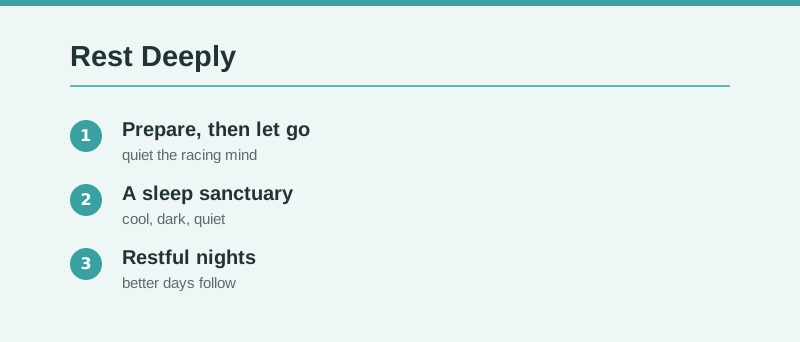
How do you quiet a racing mind before bed?
A racing mind is public enemy number one for falling asleep fast. Spend 5 minutes before your wind-down starts handling tomorrow on paper instead of in your head: lay out clothes, jot a three-item to-do list, tidy one surface. Getting tomorrow’s obligations out of your skull and onto a page frees up the mental bandwidth you need to actually drift off.
Then — and this is the hard part — consciously let it go. You’ve done the prep work; ruminating further doesn’t make tomorrow go any better, it just steals tonight’s sleep.
What makes a bedroom actually good for sleep?
Environment does more heavy lifting than most people give it credit for. Aim for a room that’s cool (60-67°F is the commonly cited sweet spot), dark, quiet, and reasonably tidy. Blackout curtains, a fan or white noise machine, and comfortable bedding are inexpensive upgrades (often $20-60 each) that pay off nightly. Keep screens and work materials out of the bedroom entirely if you can — your brain should associate that room with exactly one activity.
Myth vs Fact: Evening Wind-Down Edition
- Myth: “I’ll just power through on 5 hours, I’m fine.” Fact: Most adults need 7-9 hours, and chronic shortfall compounds — it doesn’t average out over the week.
- Myth: A nightcap helps you sleep. Fact: Alcohol can make you drowsy initially but fragments sleep later in the night, so you wake up more, not less.
- Myth: You need an expensive routine — supplements, gadgets, a $300 mattress topper. Fact: A consistent 20-minute low-tech routine beats an inconsistent expensive one, every time.
- Myth: Watching TV “to relax” counts as winding down. Fact: It delays melatonin and keeps your brain engaged — it’s stimulation dressed up as rest.
If sleep trouble persists beyond a few weeks despite a solid routine — or you notice loud snoring, gasping, or daytime exhaustion that doesn’t improve — it’s worth mentioning to a doctor, since that can point to something beyond habits, like a sleep disorder.
FAQ
How long should an evening wind-down routine be?
Anywhere from 20 to 60 minutes works — what matters more than length is doing it consistently. Start with 20 minutes if you’re new to this and stretch it out once the habit sticks.
What’s the single best change to make first?
Dimming lights and putting screens away an hour before bed usually delivers the biggest, fastest improvement. It’s free, takes no extra time, and directly affects your melatonin release.
Can naps ruin your wind-down routine’s effectiveness?
Long or late naps can, yes — a nap past 3 p.m. or longer than 20-30 minutes can reduce your natural sleep drive at bedtime. Keep naps early and short if you’re also trying to fix nighttime sleep.
TL;DR:
- Dim lights and put screens away 60 minutes before bed to protect melatonin
- Fill that hour with 2-3 genuinely calming rituals: stretching, a warm shower, reading, tea, or slow breathing
- Consistency (same steps, same time) matters more than which rituals you pick — expect results in 1-2 weeks
- Spend 5 minutes prepping for tomorrow on paper, then consciously let it go
- Keep your bedroom cool (60-67°F), dark, and quiet
- See a doctor if sleep trouble persists despite a solid routine, or if you notice snoring, gasping, or ongoing daytime exhaustion
Keep Reading
This article is for general informational and styling purposes only. Fit, sizing, and product availability may vary.