The Complete Guide to Rebuilding Your Rituals When the Daylight Changes
Quick Answer: Most morning rituals are anchored to light rather than to the clock, so they quietly break as sunrise moves later. Rebuild by identifying which of your cues were light-based, replacing them with cues that do not change seasonally, and shifting the ritual’s content toward what actually works in the dark rather than defending the summer version.
Your routine has been effortless since May. It is mid-August, the mornings are noticeably darker, and getting up is suddenly work again. Nothing about your discipline changed. The signal you were relying on did.

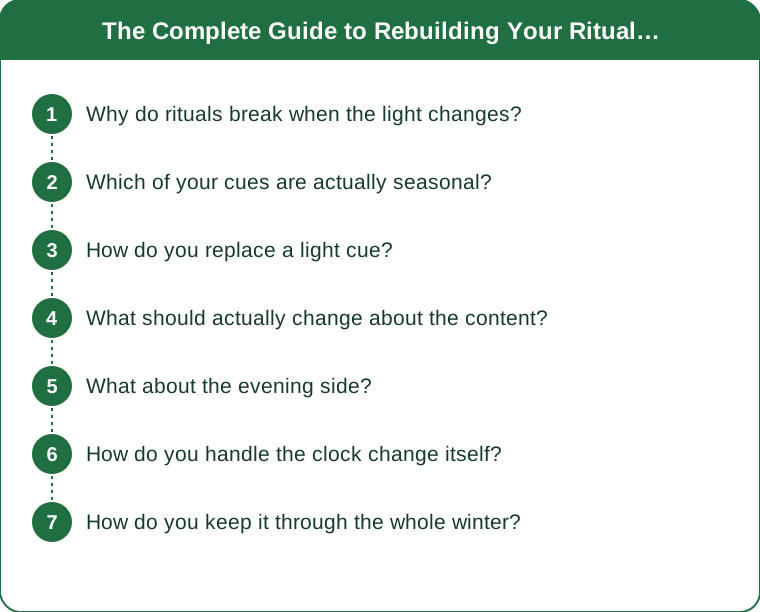
Why do rituals break when the light changes?
Because most of them were never anchored to what you thought they were.
You believe your morning ritual is anchored to your alarm. In practice, a great deal of it is anchored to light — your body’s circadian system uses light as its primary timing signal, and morning light exposure is what advances your clock and produces the alertness that made the summer version easy.
When sunrise moves later, several things change simultaneously:
- You wake before light rather than with it, which means waking against your circadian signal rather than with it
- Melatonin is still elevated at your usual wake time, producing genuine grogginess rather than reluctance
- The environmental cue disappears. A room filling with light is a powerful, effortless prompt; a dark room provides no prompt at all
- The activities themselves change. A morning walk in daylight and a morning walk in the dark are different experiences, and one of them is much easier to skip
The shift is substantial. Across the fall, sunrise moves later by roughly an hour to ninety minutes in most of the US before the clock change, and then jumps again. A ritual built in June is running on an input that has moved by an hour and a half by November.
Which reframes the problem usefully: this is not a motivation failure that happens to recur every autumn. It is a predictable input change, and it can be planned for.
Which of your cues are actually seasonal?
Worth auditing explicitly, because the answer surprises most people.
Go through your morning sequence and label each step by what actually triggers it:
Light-dependent cues (these will break):
- Waking naturally before your alarm
- Opening curtains as the first action
- Any outdoor activity — walking, running, coffee on a porch, gardening
- Reading by a window
- Anything whose appeal depends on the view
Clock-dependent cues (these survive):
- Alarm-triggered actions
- Anything tied to a fixed appointment — a class, a call, a school run
Event-dependent cues (the most robust):
- After the kettle boils
- After the shower
- While coffee brews
- After feeding a pet
- Before opening a laptop
The third category is what you want to build on, and it is the one most people have the least of. An event-anchored ritual is immune to season, to travel, to daylight saving, and to schedule changes, because the anchor travels with you.
Do this audit now rather than in November. A ritual that is already struggling is much harder to re-anchor than one that is still working, because you are then fighting both the seasonal change and a broken habit at the same time. Mid-August, when the change has started but the routine still holds, is close to the ideal moment.
How do you replace a light cue?
By supplying the light artificially, or by re-anchoring to an event. Both work, and they solve different problems.
Supplying the light. The most direct fix, and it addresses the physiological side rather than just the behavioral one:
- A sunrise alarm clock gradually brightens over 20 to 30 minutes before your wake time. There is reasonable evidence that dawn-simulation improves the experience of waking and reduces morning grogginess. This is the single highest-value purchase for anyone whose routine dies every autumn
- A bright light lamp used for 20 to 30 minutes after waking. Stronger effect on circadian timing than a sunrise alarm, and it requires you to already be up, which is the harder part
- Turning on every light in the room immediately. Free, and considerably better than nothing, though ordinary indoor lighting is far dimmer than daylight
- Getting outside early regardless. Even an overcast morning delivers far more light than an indoor room. Ten minutes outside beats an hour indoors
Re-anchoring to an event. The behavioral fix, and the more durable one long-term:
- Move each light-anchored step to an event anchor. “Journal at the window while it gets light” becomes “journal while the coffee brews”
- Chain the steps to each other so the sequence self-propels — each completed action becomes the cue for the next
- Keep the sequence order constant even if the timing moves, since the order itself becomes the cue
The combination is stronger than either alone: artificial light to make waking physiologically easier, event anchors to make the sequence run regardless.
What should actually change about the content?
More than people expect, and this is where most seasonal rebuilds go wrong — they try to preserve the summer ritual rather than build the fall one.
Some activities genuinely do not work in the dark, and defending them is how the whole routine collapses. Better to substitute deliberately:
- Outdoor movement becomes indoor movement, or moves to lunchtime. A dark 6am run is a worse experience than a bright 12:30 walk, and moving it is not a defeat
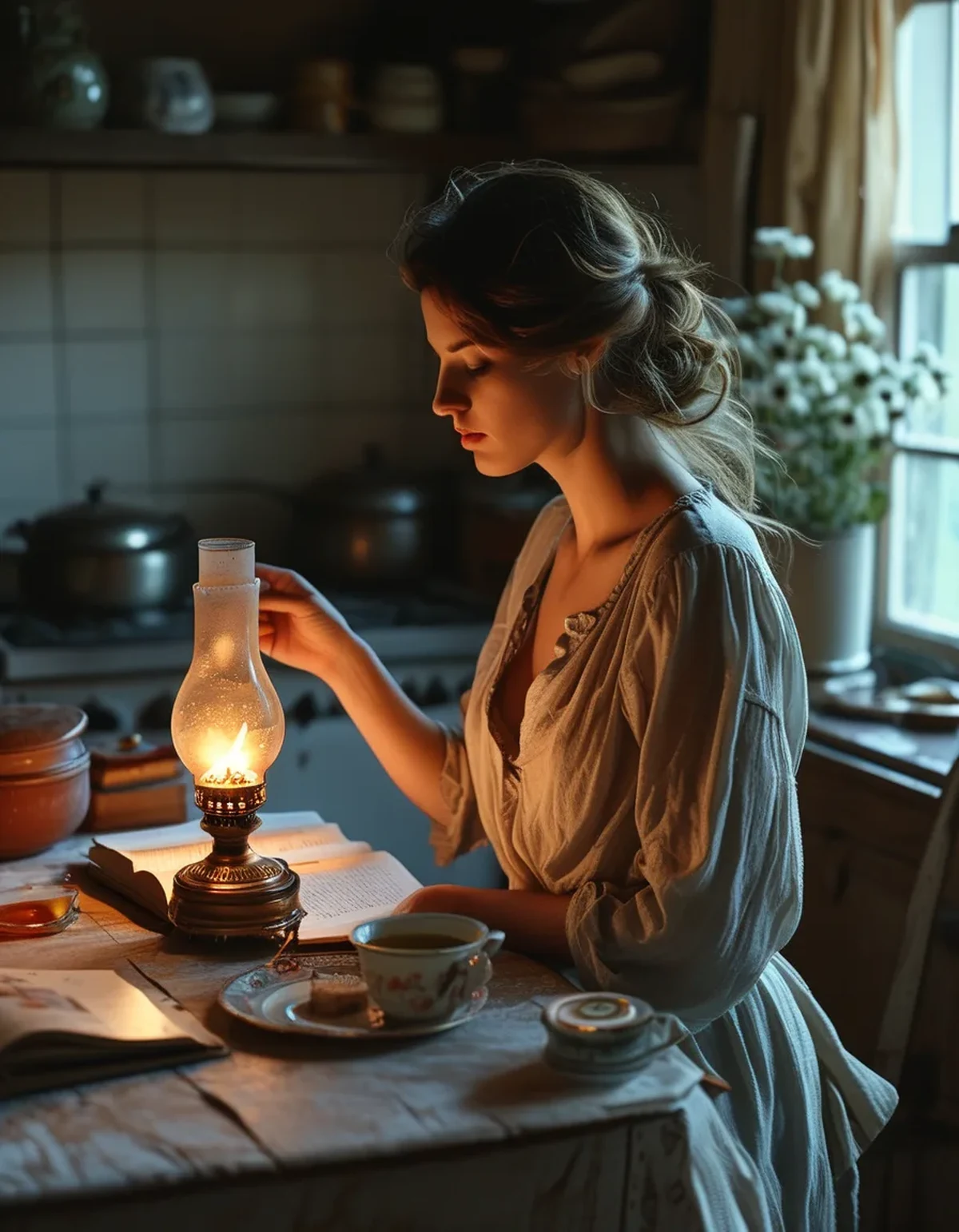
- Reading by a window becomes reading by a lamp, which is genuinely pleasant and is its own seasonal thing
- Long outdoor rituals become shorter indoor ones. A 45-minute summer routine that becomes a 20-minute fall routine is a routine that survives; a 45-minute one you skip three days a week is not
- Cold morning activities become warm ones. A cold shower that was invigorating in July is a different proposition in a 60-degree bathroom, and warmth is a legitimate part of a fall ritual
And some things are worth adding specifically because of the season:
- Something warm to hold. Trivial-sounding and genuinely effective as an anchor. Tea, coffee, broth — the physical warmth is part of the appeal
- A light source you like. A specific lamp, a candle. If the room has to be artificially lit, make the lighting something you look forward to rather than a fluorescent compromise
- A slightly later start. Fighting the season by keeping a 5:30 alarm through November is usually a losing battle, and shifting to 6:15 with a routine you actually complete beats 5:30 with one you abandon in October
The principle underneath all of this: the ritual’s purpose stays constant, the form adapts. If the purpose was a quiet unstructured half hour before the day starts, that is achievable in the dark. It just does not look the same.
What about the evening side?
Half the problem and usually the neglected half.
Earlier darkness affects evenings at least as much as mornings, and the effects run in the opposite direction:
- Melatonin rises earlier, so you feel tired sooner than you did in summer
- The urge to wind down arrives at 7pm rather than 9pm, which conflicts with dinner, family time, and any evening plans
- Evening motivation drops sharply. Evening workouts and evening social plans get harder to face from about October
- Indoor lighting matters more, because you are now under artificial light for several hours before bed
What helps:
- Dim the lights deliberately after dark rather than lighting the house at full brightness until 10pm. Bright evening light delays melatonin and makes the following morning harder
- Move demanding evening commitments earlier where you can. A 6pm class is far more sustainable in November than an 8pm one
- Let the evening ritual get longer. This is the season when it can. A wind-down that was 15 minutes in July has room to be 40 in November, and that is a genuine seasonal pleasure rather than a concession
- Accept an earlier bedtime. If you are going to bed 30 minutes earlier, an earlier wake time costs nothing
The morning and evening rituals are one system. A morning routine that is failing is very often an evening problem, and the fall version of that is going to bed at the summer time under summer lighting while expecting a body that now thinks it is two hours later.
How do you handle the clock change itself?
It is a discrete event you can plan for, and almost nobody does.
The fall clock change gives you an hour back, which sounds harmless and produces a week of disruption for many people, because it abruptly shifts the relationship between your clock and your light exposure.
A workable approach:
- Shift gradually in the three or four days before, by 15 to 20 minutes a day, rather than absorbing the full hour at once. This is standard advice for time zone travel and works identically here
- Get outside on the morning after. Light exposure is the fastest way to re-anchor, and the morning after the change is the one that matters most
- Hold your ritual constant through it. The routine is what re-establishes the rhythm, so the week of the change is the worst possible week to let it slide
- Expect two to five days of feeling off, and plan nothing demanding in that window if you have the choice
- Use the extra evening hour deliberately for the first few days rather than staying up an hour later, which converts a free hour into a sleep debt
And a wider point about the whole season: build the fall version of your ritual before you need it. Doing it now, in August, while the summer version still works, means you are making adjustments from a position of strength. Doing it in November, after three weeks of failing to get up, means rebuilding a habit and fighting the darkness simultaneously.
How do you keep it through the whole winter?
By expecting the ritual to change again, and by measuring the right thing.
Plan for at least three versions a year. A summer version, a fall and winter version, and a spring transition. People treat a routine as something you establish once, and then interpret its seasonal failure as a personal one. A ritual that changes with the season is not a failed ritual — it is a ritual that has been designed for the actual conditions.
Measure consistency, not completeness. Doing a 15-minute version six days a week is a functioning ritual. Doing the full 45-minute version twice and skipping four days is not, even though the two good days felt better. Track whether it happened, not how well.
Keep an explicit minimum version. Two or three minutes, the absolute core of what the ritual is for. On the darkest, coldest, worst mornings, the minimum version is what keeps the chain intact, and an intact chain in February is worth far more than a perfect January.
Review at the solstice. Late December is the darkest point and the natural moment to check what is still working. It is also when you have the most information about what the winter version actually needs.
Expect the hardest stretch to be January and February, not December. The novelty of the season has gone, the holidays are over, and the light has not yet returned meaningfully. Knowing that in advance makes it a predicted difficulty rather than evidence that you have failed.
And keep one thing constant across every version. One action that never changes — the same first movement, the same drink, the same two minutes — is what makes the whole sequence feel continuous across four seasonal rebuilds. That single fixed point is what the ritual actually is; everything around it is implementation.
TL;DR:
- Most morning rituals are anchored to light, not the clock, so they break as sunrise moves later
- Audit which cues are light-based, and re-anchor them to events — after the kettle, before the laptop
- Supply light artificially with a sunrise alarm or bright lamp, and get outside early regardless
- Change the content deliberately: indoor over outdoor, warm over cold, shorter over abandoned
- Fix the evening too, plan for the clock change, and keep one fixed action across every seasonal version
The routine did not fail. Its main input moved by ninety minutes, on schedule, as it does every year. Build the fall version now while the summer one still works, and the darkest weeks become something you planned for rather than something that happened to you.
Keep Reading
This article is for general informational and styling purposes only. Fit, sizing, and product availability may vary.